PPWR: Anticipating New Packaging Requirements
27 Jul 2026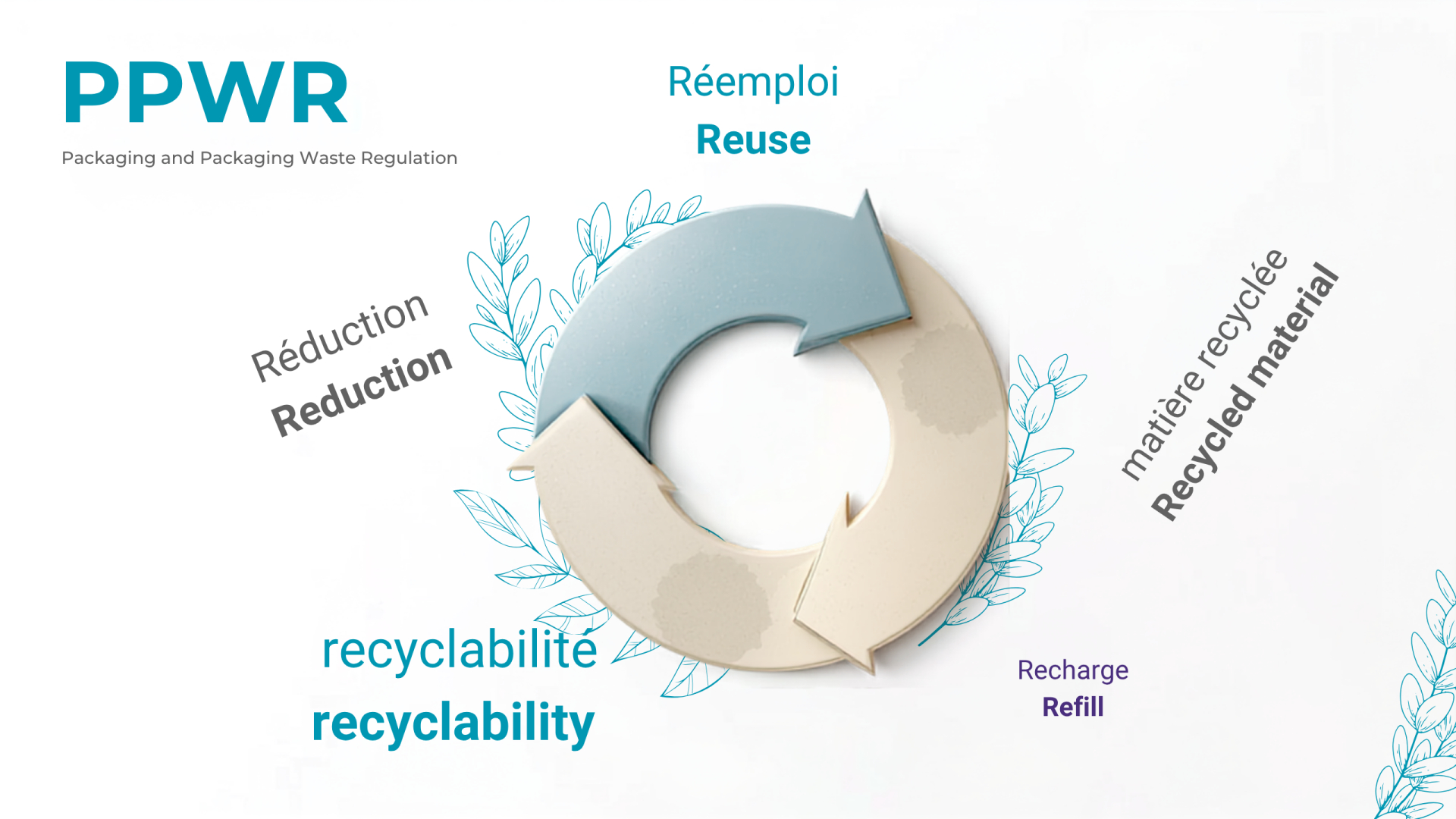
PPWR: 2030 starts today
The PPWR (Packaging and Packaging Waste Regulation) is bringing major changes to the rules governing packaging in the European Union. Recyclability, incorporation of recycled material, packaging reduction and reuse: the new requirements will progressively transform the way packaging is designed and developed.
The PPWR entered into force on 11 February 2025 and will generally apply from 12 August 2026. Several requirements will then be phased in progressively, particularly from 2030 onwards.
Preparing for the PPWR therefore does not mean waiting for the next regulatory deadlines. Packaging developed today must already take tomorrow’s changes into account.
EMBELIA supports its clients through this transition by identifying solutions that balance regulatory requirements, technical performance, quality, functionality and design.
PPWR: what changes for packaging?
The PPWR aims to reduce the environmental impact of packaging and promote circularity. It introduces new requirements covering the entire packaging life cycle, from design through to end of life.
For packaging teams, this means integrating new criteria into development projects: choice of materials, recyclability, incorporation of recycled material, reduction in the amount of material used, and the use of refillable and reusable solutions.
These changes do not alter the essential functions of packaging. Packaging must still protect the formula, ensure proper use and dispensing, meet the regulatory requirements of its market and convey the brand’s identity.
The challenge is therefore to find the right balance between environmental performance and packaging performance.
Packaging recyclability: designing differently
Recyclability is one of the key pillars of the PPWR.
From 2030, packaging will have to meet new design-for-recycling criteria. The regulation provides for the classification of recyclability performance into three grades – A, B and C – and considers packaging with recyclability below 70% to be technically non-recyclable.
The calculation methods and technical criteria still need to be specified in European implementing legislation. However, this change can already be anticipated at the design stage.
Recyclability must be considered across the entire packaging system
Packaging is not limited to the material used for the container; it includes all the components that make up the complete pack.
Improving recyclability therefore means considering the packaging as a whole, particularly by looking at the choice and combination of materials, the number of components, their separability, the weight of the packaging and the selected decoration solutions.
Recycled material: new targets for plastic packaging
The PPWR also provides for the progressive incorporation of a minimum percentage of recycled material from post-consumer plastic waste, or PCR, in the plastic packaging concerned.
Targets vary according to the nature and use of the packaging and will be strengthened by 2040.
Incorporating recycled material is therefore becoming a criterion to consider today when selecting packaging, particularly for products intended to remain on the market for several years.
Incorporating recycled plastic is not simply a matter of changing resin
Switching from virgin resin to recycled material cannot be approached as a simple substitution.
Depending on the material, the percentage of PCR and the application concerned, incorporating recycled material may affect various packaging parameters: technical characteristics, visual appearance, colour, transparency, material consistency and decoration possibilities.
It must also be assessed in relation to the formula being packaged, the use of the product and the regulatory requirements specific to each market.
Choosing a solution incorporating recycled material must therefore take into account:
- the required technical performance;
- compatibility between the container and the formula;
- the desired aesthetic appearance;
- decoration and customisation possibilities;
- material availability;
- the achievable recycled material content;
- the applicable regulatory requirements.
The right recycled material content is the one that makes packaging more sustainable without compromising its function, quality or use.
How EMBELIA supports brands in preparing for the PPWR
EMBELIA designs, develops, qualifies and distributes primary packaging solutions for the Beauty, Healthcare and Food Supplement markets.
Our role is to support brands in their packaging choices by integrating regulatory developments with the practical constraints of each project.
Identifying the right solutions for each project
Recycled or recyclable materials, lightweight packaging, refillable solutions, existing components or custom development: we identify solutions tailored to the specifications, without focusing on a single criterion.
Packaging choices must remain consistent with the formula, intended use, required performance, brand identity and regulatory requirements of the relevant market.
Qualifying solutions before implementation
Changing a material or component can affect packaging performance.
EMBELIA’s support therefore includes the technical qualification of selected solutions to verify that they meet project requirements before implementation.
This approach enables a progressive transition towards more responsible solutions while safeguarding the essential functions of the packaging
PPWR: essential questions
What is the PPWR?
The PPWR (Packaging and Packaging Waste Regulation) is the European regulation on packaging and packaging waste. It introduces new requirements in areas including recyclability, recycled content, packaging reduction and reuse.
When does the PPWR apply?
The PPWR entered into force in February 2025 and will apply for the most part from 12 August 2026. Several requirements will then be phased in progressively, with key deadlines from 2030 onwards.
Does the PPWR require recycled material in plastic packaging?
Yes. The PPWR sets minimum targets for recycled content from post-consumer plastic waste in plastic packaging. The percentages vary depending on packaging categories and uses, and the targets will progressively increase.
Is recyclable packaging necessarily PPWR-compliant?
Recyclability is an important requirement under the PPWR, but it is not the only criterion to consider. The regulation also covers other areas such as packaging waste prevention, recycled content, reuse and information requirements. The applicable requirements also depend on the type of packaging and its intended use.
How can brands prepare cosmetic packaging for the PPWR?
Preparation can begin at the packaging design or redesign stage: analysing the materials and components used, assessing recyclability, evaluating the incorporation of recycled material, reducing packaging weight or considering a refillable solution. These changes must be assessed taking into account formula compatibility, technical performance, design and the product’s regulatory requirements.
These articles might be of interest
:RECYCLAGE CHIMIQUE ET ALLOCATION MASS BALANCE
 22 Nov 2022
What is chemical recycling and why is it called mass balance?
COLORS VARIATIONS OF RECYCLED PET
 09 Oct 2022
For a same percentage of recycled material, the degree of transparency may vary according to the production batches and the plant.
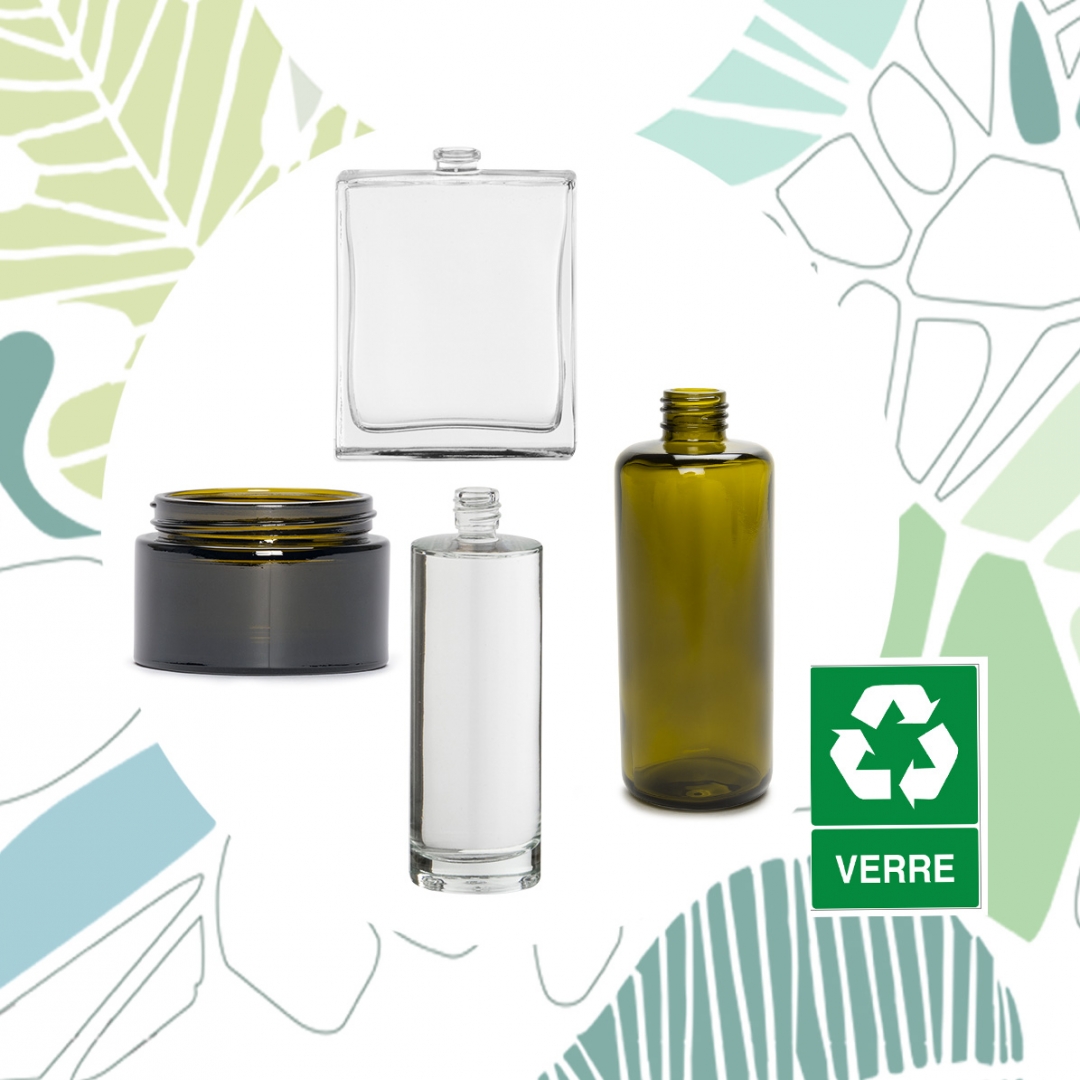
RECYCLED PCR GLASS IN OUR STANDARD RANGES
 02 Oct 2022
You surely know that glass is a material that can be recycled 100% and infinitely, that its recycling allows to limit the consumption of natural resources, to consume less energy and to reduce CO2 emissions but did you know
RECYCLED MATERIAL - ALUMINIUM
 29 Sep 2022
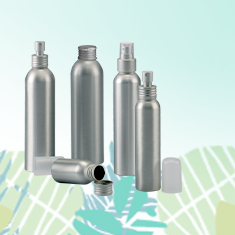
EMBELIA is commited in a sustainable development approach and offers you recycled aluminum bottles, jars and caps.
Aluminium is an infinitely recyclable material without altering its properties
- PPWR: Anticipating New Packaging Requirements PPWR, recyclability, recycled materials, eco-design: EMBELIA supports brands in adapting their packaging to meet new European requirements.
- ReSource eco-designed refill | PET / RPET refill bottle ReSource eco-designed refill | PET / RPET refill bottle
- ECODESIGN - REFILLABLE PACKAGING REFILL
- CLASSIC JAR - LIGHTWEIGHT, REFILLABLE AND RECYCLED ! ECOCONCEPTION POT
- LIDS, CAPS AND OVERCAPS Wood you take some more accessories ?
- RECYCLAGE CHIMIQUE ET ALLOCATION MASS BALANCE RECYCLAGE CHIMIQUE ET ALLOCATION MASS BALANCE